
What does it really mean to walk alongside someone during the final season of life?
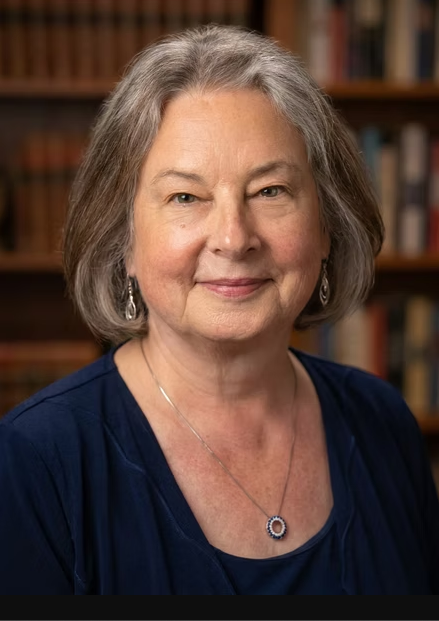
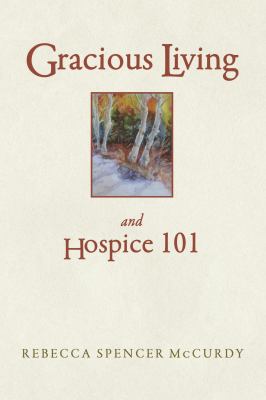
Alliance resident Rebecca Spencer McCurdy explores that question in her first book, Gracious Living and Hospice 101, a unique combination of fiction and practical guidance drawn from three decades of experience working with hospice volunteers.
McCurdy, who served for 30 years as manager of volunteers at Ohio’ s Hospice LifeCare in Wooster, will appear at Rodman Public Library on Saturday, November 7 to discuss her book and hospice care in general. McCurdy’s presentation will be a conversation between herself and RPL Community Relations Manager Jack Weber, who will ask her questions with the intention of creating a larger discussion between the author and the audience.
Registration is required to attend.
The first half of Gracious Living and Hospice 101, tells the fictional story of Kate, a woman in her 40s who has been diagnosed with terminal cancer. After asking her hospice volunteer, Fran, to record the memories of her life, Kate begins the deeply personal process of looking back at the people, experiences and relationships that have shaped her. Through Kate and her volunteer, McCurdy examines the emotional realities of facing the end of life and the ways that such an experience can affect not only those receiving care, but also those who provide it.
The second half of the book shifts from fiction to practical instruction. McCurdy shares skills and strategies for supporting people facing terminal illness, with particular attention to the role of hospice volunteers. The material also offers useful guidance for friends and family members who want to provide meaningful support to someone they love during the final chapter of life.
McCurdy’s years of working alongside patients and volunteers shaped her belief that caring for someone at the end of life can be a profoundly meaningful experience for everyone involved.
Ahead of her appearance at RPL, McCurdy answered some questions via email.
Here is what she had to say:
Q: Your book combines fiction with practical information about hospice care. What inspired you to bring those two very different approaches together in one book?
A: I believe strongly that the principles that undergird the hospice movement are very valuable to people as they approach their own end-of-life experience or the end-of-life experience of someone they love. However, really understanding these principles is very difficult if they remain just abstract principles, unconnected to any one individual’s life or family’s experience. By including the fictional account of Kate’s end-of-life experience, and her relationship with hospice as personified by the character of Fran, her volunteer, I tried to “put flesh on” what these principles really mean and how they enhance quality of life for the people they touch.
Q: The fiction portion of the book is the story of Kate, a woman facing terminal cancer, and her hospice volunteer, who records the memories of her life. What do you hope readers take away from Kate’s story?
A: Well, there are a lot of things I wanted readers to experience through Kate’s story. Maybe chief among them is that even an ordinary life is beautiful and that even this very difficult “last season of life” can have great beauty and even joy. In my 30+ years of hospice work, I saw so much that is beautiful: the stories of people rising to the occasion of caring for those they love, the beauty of the opportunity to say our good-byes without the burden and barrier of unrelieved pain, the opportunity to review one’s life and find it’s meanings and power. Socrates said, “The unexamined life is not worth living.” I wouldn’t go quite that far, but the opportunity of reflection at the end of life does seem to me to be an important one. Also, to be honest, I wanted a reader to fall a little bit in love with Kate, so that her suffering, her joy, her memories, and finally, her death would mean something to the reader.
Q: You spent three decades working with hospice volunteers. Was there a particular person, experience or moment that stayed with you and eventually made you think, “I need to write about this?”
A: Oh so many ... so very many! There was the woman whose father had abandoned her and her mother when she was a child, but who chose to be the primary caregiver for him after his terminal diagnosis because he didn’t have anyone else in his life to do that ... and the healing that happened in that situation. There was a man in his late 50's who reminisced with me in great detail (as a hospice patient with a diagnosis of ALS who could no longer walk, or use his hands, or even cough effectively) about the time his high school hockey team won the state championship and how all the joy and comradeship of that event still resonated with him. There was the day a volunteer returned from a visit with a woman suffering with dementia where when the volunteer entered her room for the first time, the patient was hallucinating that there was a small child bouncing on her bed. She was frightened for the child’s safety and frightened for her own safety. The volunteer, who was just meeting the patient for the first time that day, said, “I’ll take care of it.” She told “the child” that he needed to go back to his mother, and held out her hand and walked back out of the room. When she returned a moment later, the patient gratefully welcomed her and this experience of having her concerns taken seriously became the basis for a warm and supportive friendship until the end of the patient’s life. I am not exaggerating when I say that almost every day something would happen that would make me cry, and they were, almost always, tears of joy.
Q: The title Gracious Living and Hospice 101 suggests that hospice is about much more than the final days of someone’s life. What does “gracious living” mean to you in the context of facing the end of life?
A: On the one hand, it refers to the fact that even though someone must have a diagnosis of terminal illness and a prognosis of six months or less, to be admitted to hospice, the truth is that “Death is just a moment in time and all the rest is living.” (Carol McKiernan, former executive director of Ohio's Hospice LifeCare). As I mention in the book, my cousin Glenn was diagnosed with terminal renal disease in his 40's. When I asked Linda, his wife, about this experience after his death, she said that after it became apparent that they were not going to find a medical miracle, that she and Glenn had taken care of the business matters necessary for Glenn to be confident that his family would be OK, and then they “loved each other as much as they could, for as long as they could.” This is the gift hospice offers its patients. For many people, “the last season of life” is the richest, most poignant time of their lives. It’s a gift no one wants, of course ... but it is a gift. Especially as compared to an endless series of medical interventions and isolation from friends and family that often accompanies serious illness. Hospice is about life ... lived, for sure, in the shadow of death ... but still a potentially rich and beautiful time of life.
Q: Hospice can be a difficult subject for families to talk about. And there are a lot of misconceptions of what hospice care really means. What do you wish more people understood about hospice before they or someone they love actually need it?
A: You are absolutely right that this is a very difficult conversation for families to tackle. Many doctors can’t even bring themselves to speak the truth to their patients about a terminal diagnosis. My own mother, when I suggested it might be time to get hospice involved in her care, said, “You just want me to die sooner!” What I wish every person understood was that hospice neither “hastens death nor prolongs life.” In fact, some studies have shown that if you have two people with the same diagnosis and a similar clinical picture, but one is receiving hospice care and the other is still pursuing curative treatment, the one receiving hospice care will usually live longer. My theory on why this happens is that being in hospice care means your pain and other symptoms are being controlled and that your emotional and spiritual needs are being addressed, so that a person’s will to live is strengthened. Also, admission to hospice often alerts family and friends to the fact that someone’s life trajectory is limited and it is time for them to spend some precious time with that person and prioritize that person’s needs. Again, when that happens, life becomes richer and a person’s will to live is strengthened. Most people can tell that they’ve turned a corner when it’s time for admission to hospice, whether a doctor has been honest with them or not. Being set free to talk about this huge realization makes the end-of-life journey far less lonely.
Q: Writing a book is quite an undertaking, especially when it's your first one. What surprised you most about the process of becoming an author?
A: Well, to be honest it took me about 20 years to write this book, so it wasn’t a sudden thing. However, I was surprised by the fact that after you’ve written a book on a subject, it does give you some validation to whatever efforts you might make to disseminate the information the book contains. In my case I’ve been able to lead a number of workshops on the topic of “How to Support the Ones You Love in the Last Season of Life.” This is a great joy to me, because as I’ve said, I believe strongly in the efficacy of hospice care in improving the quality of life for both the patient and the family and friends of the patient.